
“Growth becomes difficult when every new location adds new processes instead of extending the ones that already work.”
Managing a multi-location healthcare organization is not simply about handling more patients. As practices expand, patient calls, appointment workflows, administrative processes, and operational requirements can become increasingly inconsistent across locations.
The best automation software for multi-location healthcare practices helps organizations standardize repeatable workflows while maintaining flexibility for individual locations. For healthcare groups managing dozens of facilities, the right platform should support centralized automation, scalable patient communication, intelligent call handling, connected workflows, and coordination around large-scale medical billing operations.
This guide focuses on the key capabilities healthcare organizations should look for when choosing automation software for multi-location practices, including support for standardized communication, scalable workflows, large-scale medical billing operations, and how solutions such as MantraAssist can support consistent growth.
Why Multi-Location Healthcare Practices Need Automation
A workflow that works for one location does not automatically scale across an entire healthcare network.
As organizations add providers, specialties, and locations, teams may begin handling similar tasks differently. One office may have an efficient process for appointment calls, while another relies heavily on manual coordination and local staff knowledge.
This can result in inconsistent patient experiences, repetitive administrative work, and greater operational complexity as the organization grows.
The challenge becomes particularly significant for organizations focused on standardizing call handling across 50 locations. Without connected systems, each location can gradually develop its own processes for answering calls, routing patients, managing appointment changes, and handling routine inquiries.
The same scalability challenge can affect large-scale medical billing, particularly when administrative processes and communication workflows differ between locations.
Automation provides an opportunity to establish a common operational foundation without forcing every location to operate in the same way.
What the Best Automation Software Should Offer
The best automation software for multi-location healthcare practices should do more than automate one isolated task.
It should help healthcare organizations standardize the workflows that need consistency while allowing location-specific rules for providers, schedules, specialties, departments, and services.
Key capabilities include:
- Multi-location scalability: Extend established workflows as new locations are added.
- Centralized workflow management: Create common standards across the organization.
- Intelligent patient communication: Understand routine patient requests and guide them toward the appropriate workflow.
- Call routing: Direct interactions to the correct location, department, or team.
- Appointment automation: Support eligible scheduling, rescheduling, cancellation, reminder, and follow-up workflows.
- Location-specific configuration: Apply different providers, schedules, operating hours, and routing rules where required.
- Human escalation: Ensure complex, sensitive, clinical, or unusual interactions reach appropriate staff.
- Integration capability: Connect automation with the systems required to complete workflows.
- Workflow consistency: Support connected administrative processes around patient communication and large-scale medical billing operations.
The most important consideration is whether the platform can support the organization’s operational model as it grows.
How Automation Standardizes Call Handling Across Multiple Locations
Patient communication is often one of the first areas where inconsistency becomes visible.
A patient calling one location may quickly reach the right department, while another patient calling a different location may navigate several menus or be transferred multiple times. The underlying request may be similar, but the experience can vary significantly.
Automation can help establish common workflows for routine interactions such as appointment requests, cancellations, rescheduling, location information, and administrative inquiries.
For example, the process for identifying an appointment-related request can remain consistent across the organization. The automation can then apply location-specific rules based on the patient’s provider, appointment type, specialty, or preferred facility.
This approach allows healthcare organizations to create a more consistent patient experience while preserving the flexibility required at individual locations.
How MantraAssist Supports Multi-Location Healthcare Practices
When evaluating the best automation software for multi-location healthcare practices, healthcare organizations need more than a generic automation tool.
MantraAssist is designed to support healthcare organizations with AI-powered patient communication and workflow automation that can help streamline repeatable administrative interactions across multiple locations.
For growing healthcare groups, MantraAssist can support workflows involving patient calls, appointment management, intelligent routing, and routine patient communication.
Standardizing Patient Call Handling
MantraAssist can help organizations create consistent workflows for high-volume patient interactions.
Instead of relying entirely on individual locations to determine how routine calls are handled, healthcare organizations can establish common communication and routing workflows that apply across the network.
This approach can support organizations working to standardize call handling across 50 locations while allowing calls to be routed to the relevant location, department, provider, or configured workflow.
Appointment Automation Across Locations
Appointment workflows can become increasingly complex as healthcare groups expand.
Different locations may have different providers, schedules, appointment types, and specialty requirements. A centralized automation approach can maintain a consistent patient interaction while applying the relevant rules for each location.
Appointment automation supports appointment-related workflows including scheduling, rescheduling, cancellations, reminders, and related patient communication.
Healthcare Call Center Automation
Large healthcare organizations often need a more scalable approach to patient call handling.
Healthcare call center automation can help automate appropriate routine interactions and direct more complex requests toward the relevant team or workflow.
This can be particularly valuable for organizations managing multiple locations without requiring every routine patient interaction to be handled manually.
Supporting Staff Capacity
The purpose of automation is not necessarily to remove staff from the patient communication process.
Instead, MantraAssist can help reduce repetitive administrative work so teams can focus more of their time on complex patient needs, sensitive interactions, workflow exceptions, and other situations where human support provides greater value.
Automation, Large-Scale Medical Billing, and Multi-Location RCM
Healthcare organizations managing large-scale medical billing and evaluating RCM solutions for multi-location groups face similar challenges around process consistency.
As locations expand, communication, routing, follow-up, and administrative coordination can become fragmented if teams rely on separate manual processes.
For organizations managing large-scale medical billing, even small differences in administrative processes can become more difficult to control when repeated across dozens of locations.
Automation can support the broader administrative workflows surrounding these operations by creating more consistent processes for patient communication, information handling, routing, and follow-up.
When evaluating RCM solutions for multi-location groups, healthcare organizations should consider how these surrounding workflows connect with their broader revenue cycle operations.
Automation does not necessarily replace specialized medical billing or RCM platforms. Instead, it can help connect and streamline administrative workflows that surround these systems.
For multi-location organizations, large-scale medical billing requires not only the right financial systems but also consistent administrative coordination as operational volume increases.
Centralized Automation Without Losing Local Flexibility
One of the biggest concerns for multi-location healthcare organizations is whether standardization will make individual locations too rigid.
The strongest automation approach combines centralized standards with local configuration.
For example, an organization can establish a consistent workflow for appointment requests across the network while allowing individual locations to maintain their own providers, schedules, appointment availability, departments, and operating hours.
| Without Connected Automation | With Healthcare Automation |
|---|---|
| Locations may develop separate processes | Core workflows can be standardized |
| Patient call handling can vary | Common communication workflows can be applied |
| Staff rely heavily on local knowledge | Defined workflows support consistent handling |
| New locations may require separate setup | Existing workflows can be extended |
| Operations can become fragmented | Processes can be managed more consistently |
This approach can also support organizations managing large-scale medical billing by reducing unnecessary variation in the administrative workflows that operate across multiple locations.
It allows healthcare groups to grow without rebuilding the same processes every time a new location is added.
How to Choose the Right Automation Platform
Healthcare organizations should start by identifying the processes that become more difficult to manage as new locations are added.
These may include patient calls, appointment requests, administrative routing, follow-ups, communication workflows, and processes surrounding large-scale medical billing.
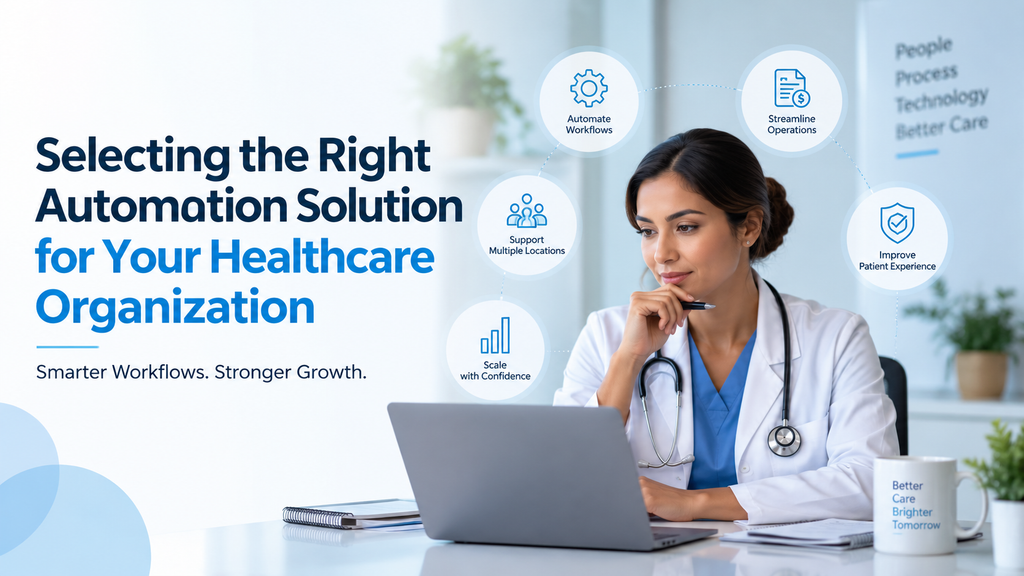
The right automation platform should help answer important questions:
- Can workflows be standardized across locations?
- Can location-specific rules still be configured?
- Can the platform support increasing patient communication volume?
- Can routine interactions move toward workflow completion?
- Can complex requests be escalated appropriately?
- Can workflows supporting large-scale medical billing and broader administrative operations remain consistent as the organization grows?
- Can the system scale without requiring workflows to be rebuilt for every new site?
The best automation strategy is not about automating everything.
It is about identifying the repeatable administrative processes where standardization can reduce workload and support consistent operations.
Key Takeaway
The best automation software for multi-location healthcare practices should help organizations solve one of their biggest scaling challenges: maintaining consistency as the number of locations grows.
For healthcare groups managing patient communication, appointment management, call handling, and large-scale medical billing operations across multiple facilities, a healthcare-focused platform can provide a more scalable approach to workflow automation.
By combining centralized workflows with location-specific flexibility, healthcare organizations can reduce repetitive administrative work and create a stronger operational foundation for growth.
MantraAssist can support this approach by helping healthcare organizations connect AI-powered patient communication with appointment management, call routing, and repeatable administrative workflows.
Frequently Asked Questions
The best platform depends on the organization’s workflows, but multi-location healthcare groups should look for software that supports scalable automation, centralized workflow management, patient communication, intelligent routing, appointment workflows, location-specific configuration, and connected administrative processes.
Organizations can create common workflows for high-volume patient interactions while applying location-specific routing and scheduling rules. This allows the core communication process to remain consistent without forcing every location to operate identically.
Automation can support RCM solutions for multi-location groups by helping standardize connected administrative workflows involving patient communication, routing, follow-ups, information handling, and task coordination. Its role should complement the organization’s existing medical billing and revenue cycle systems.

