
Orthopedic surgery scheduling requires coordination across surgeons, operating rooms, clinical teams, equipment, implants, and patients. OR coordination software can help bring these moving parts into a more structured workflow, reducing reliance on disconnected systems, manual follow-ups, and fragmented communication.
From confirming surgeon availability and operating room capacity to managing pre-operative requirements and patient communication, even small gaps can create additional administrative work or contribute to delays. A more connected approach can help teams gain visibility into potential issues before they affect the surgical schedule.
This article explores how automated scheduling, OR coordination software, and AI-supported patient communication can help orthopedic clinics and hospitals improve coordination, workflow visibility, and operational efficiency.
The Real Cost of Surgical Delays
Surgical delays can affect patients, clinical teams, operating room capacity, and hospital operations.
Research shows that elective surgery cancellations can result from multiple factors. A systematic review identified hospital-related issues-including operating room availability, scheduling policies, and bed capacity-among the major causes of elective surgery cancellations, alongside work-up and patient-related factors.
Research also demonstrates that cancellation rates can be significant in specific healthcare settings. A systematic review and meta-analysis from Ethiopia found a pooled elective surgery cancellation rate of 21.41%, with administrative factors accounting for a substantial share of identified causes. This figure should be interpreted within the context of the healthcare settings included in that research rather than as a universal cancellation rate.
When a procedure is delayed or canceled, the impact can extend beyond the individual case:
- Patients may wait longer for treatment.
- Hospitals may lose valuable operating room capacity.
- Staff may face additional pressure from last-minute schedule changes.
- Repeated disruptions can affect the patient experience and confidence in the scheduling process.
A single orthopedic procedure, such as a hip or knee replacement, involves numerous coordinated elements. Surgeons, anesthesiologists, nurses, imaging teams, equipment vendors, and patients may all need to be aligned. A disruption in one area can affect the entire case.
Manual scheduling can compound this complexity. Information may be spread across spreadsheets, EHR systems, phone calls, emails, and departmental workflows. When communication gaps or scheduling conflicts are identified late, teams have less time to resolve them.
Improving coordination through OR coordination software may help organizations identify and address some preventable issues earlier in the scheduling process.
What Is Automated Surgical Scheduling?
Automated surgical scheduling refers to the use of software to plan, coordinate, and manage surgical cases with less reliance on manual administrative processes.
Depending on the platform and its integrations, automated scheduling can bring together information about operating room availability, staff schedules, equipment requirements, and patient readiness. This can give scheduling teams better visibility into potential conflicts, incomplete requirements, and issues requiring attention before the procedure.
Unlike a paper calendar or basic spreadsheet, automated systems may provide more dynamic visibility into scheduling changes and operational requirements. Depending on the system, they may also provide updates, identify potential conflicts, and flag missing requirements.
For orthopedic clinics, this distinction is particularly important. Joint replacements, spine procedures, and trauma surgeries may require specific implants, imaging, equipment, and pre-operative clearances. A well-designed OR coordination software platform can help consolidate relevant information rather than leaving it distributed across multiple departments.
Patient-facing scheduling automation can also complement internal coordination. For example, automated appointment scheduling workflows can support appointment changes, reminders, cancellations, and calendar updates within a more connected workflow.
How OR Coordination Software Works
OR coordination software serves as an operational layer that can support automated surgical scheduling by improving visibility across the departments and resources involved in a surgical case.
Depending on the platform, it may support:
- Room and equipment availability – identifying available operating rooms and confirming that required equipment or implants are ready.
- Staff coordination – aligning surgeons, anesthesiologists, nursing teams, and other required personnel.
- Pre-operative requirements – tracking relevant labs, imaging, documentation, and consent requirements.
- Scheduling updates – helping relevant teams receive changes without relying entirely on manual phone calls or fragmented communication.
- Vendor and supply coordination – improving visibility into implant and specialty instrument requirements.
The value of centralized scheduling visibility is supported by recent research. An interrupted time-series analysis of a digital surgery scheduling system at an NHS Trust found that, compared with counterfactual estimates, booked theater utilization was 15.0% higher and actual theater utilization was 12.2% higher during the post-intervention period.
Effective OR coordination software can therefore do more than populate a calendar. Depending on its features and integrations, it can help teams identify incomplete requirements, missing information, and other potential coordination issues before the scheduled procedure.
This type of operational coordination can work alongside AI appointment automation, particularly when organizations need to manage booking, rescheduling, cancellations, reminders, and waitlist activity.
Why Orthopedic Clinics Face Additional Coordination Challenges
Orthopedic surgery often involves scheduling requirements that can increase coordination complexity.
Many procedures require specific hardware, including implants selected for the individual patient and procedure. Imaging may need to be available for surgical review, while pre-operative requirements must be completed before the case proceeds. Recovery planning, including physical therapy and rehabilitation coordination, may also begin before surgery.
Because multiple requirements must be coordinated simultaneously, orthopedic clinics may benefit from a more connected scheduling approach.
A platform designed to support orthopedic surgical workflows may help teams track implant requirements, identify missing imaging or documentation, and coordinate related activities from a centralized workflow rather than through separate systems.
This is particularly relevant for orthopedic practice automation, where surgical readiness, imaging coordination, post-operative recovery, and rehabilitation may all depend on connected communication.
The ability to identify potential issues earlier rather than responding after they affect the schedule represents an important value of OR coordination software.
Manual vs. Automated Scheduling
Manual scheduling often depends on multiple communication channels, separate records, and repeated administrative follow-ups. Automated scheduling and OR coordination software aim to bring more of these processes into a connected workflow.
Automation does not eliminate the role of scheduling or clinical staff. Instead, it can reduce repetitive administrative work while providing better visibility into information that still requires human review and decision-making.
For the patient-facing side of scheduling, healthcare Voice AI can also support routine interactions such as appointment confirmations, reminders, follow-ups, and call routing.
The Role of AI in Patient Communication
Surgical scheduling extends beyond the operating room. It also includes the patient’s experience before and after the procedure.
Missed calls, unclear pre-operative instructions, incomplete follow-up, and delayed responses can create communication gaps even when the operating room schedule itself is well managed.
This is where AI-supported patient communication can provide additional value alongside OR coordination software.
Platforms such as MantraAssist are designed to support patient communication, scheduling, and care coordination for healthcare organizations. For orthopedic practices, AI-supported communication can complement surgical scheduling workflows by helping manage appointment communication, pre-operative outreach, and post-operative follow-ups.
AI voice and chat tools can support routine patient interactions, appointment confirmations, and reminders. For orthopedic clinics, this type of communication support may assist with pre-operative instructions, imaging coordination, appointment reminders, and rehabilitation follow-ups.
Automated reminders are also an important part of maintaining communication throughout the scheduling process. Automated Appointment Reminder Systems can support confirmation, cancellation, rescheduling, and patient response workflows.
The greatest value may come when organizations connect OR coordination software with patient communication rather than treating operational scheduling and patient engagement as completely separate processes.
Key Benefits of Automated Surgical Scheduling
The potential benefits of automated surgical scheduling extend beyond simply organizing the operating room calendar. By improving visibility and coordination across scheduling workflows, these systems can help orthopedic clinics reduce administrative friction and manage complex surgical requirements more efficiently.
1. Potentially Fewer Preventable Disruptions
By improving visibility into incomplete pre-operative requirements, automated systems may help teams identify and address preventable issues earlier.
This does not eliminate surgical cancellations, as many involve clinical, patient-related, or unforeseen circumstances. However, better coordination can support efforts to reduce avoidable last-minute disruptions associated with incomplete information or administrative gaps.
2. Better OR Utilization
Scheduling and coordination tools can improve visibility into gaps and changes in the operating room calendar.
This may allow teams to identify unused capacity earlier and make adjustments more proactively. Research on digital surgical scheduling has also demonstrated the potential for improvements in theater utilization when scheduling information is managed through a centralized system.
3. Reduced Administrative Burden
Automated tools can handle routine confirmations, reminders, and selected administrative tasks.
By reducing time spent on repetitive phone calls, follow-ups, and information tracking, automation may allow scheduling teams to focus more attention on complex cases and patients who require direct assistance.
For organizations managing high call volumes, healthcare call center automation may also help support patient communication while providing pathways for human escalation when needed.
4. Improved Patient Communication
Automated communication tools can help patients receive clearer and more timely information regarding appointments, procedures, and pre-operative requirements.
More consistent communication may help reduce confusion and contribute to a smoother patient experience in the period leading up to surgery.
5. Stronger Workflow Visibility
OR coordination software can centralize information related to scheduling requirements, documentation, clearances, and communication.
Depending on the platform and its implementation, this can support better workflow visibility and make it easier for teams to review the status of upcoming cases.
6. More Standardized Workflows
Centralized workflows can help new schedulers and nurses understand how information, tasks, and requirements are managed across the surgical scheduling process.
Standardization may also reduce reliance on informal knowledge sharing and individual communication habits.
Common Implementation Challenges
Automation can improve workflows, but implementation requires planning. Orthopedic clinics and hospitals considering OR coordination software should anticipate challenges related to:
- EHR integration and technical configuration.
- Staff training and adoption of updated workflows.
- Data accuracy, since automated processes depend on reliable information.
- Change management, particularly when teams are accustomed to manual processes.
These challenges can be addressed through planning, training, testing, and phased implementation.
A gradual rollout allows organizations to identify workflow issues and make adjustments before expanding the system more broadly.
Choosing the Right OR Coordination Software
When evaluating surgical scheduling platforms and OR coordination software, orthopedic clinics should consider the following questions:
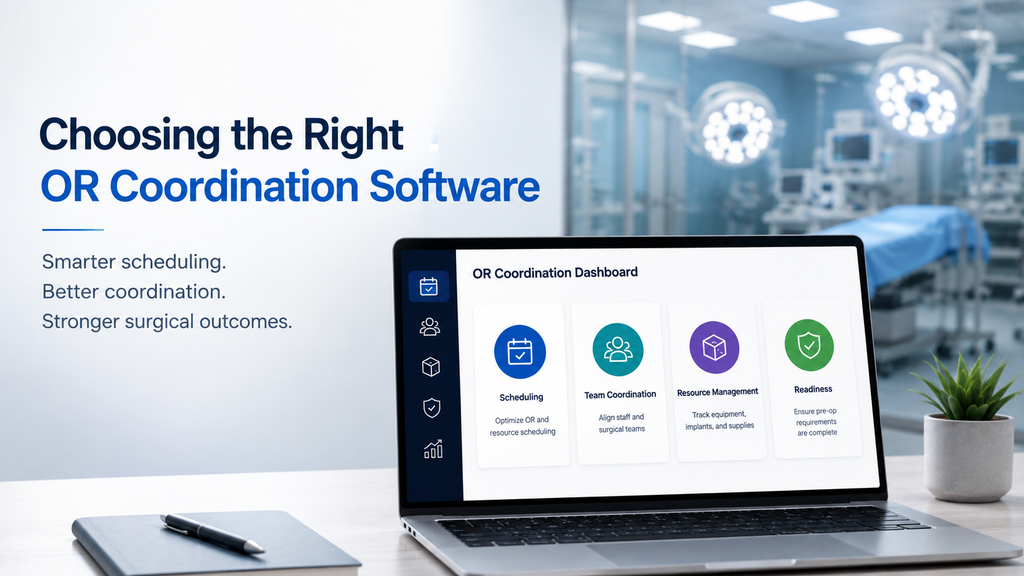
- Does it integrate with our current EHR and practice management systems?
- Can it support orthopedic-specific requirements such as implant tracking and imaging coordination?
- Does it provide timely updates for relevant staff and stakeholders?
- Can it support patient communication alongside internal scheduling workflows?
- Does it provide appropriate security controls, audit capabilities, and access management for the way patient information will be handled?
The right platform should support the organization’s clinical and operational requirements rather than creating unnecessary complexity.
A Practical Implementation Approach
Transitioning to automated scheduling and OR coordination software requires a structured approach:
1. Assess Current Workflows
Identify where delays, repeated administrative work, communication gaps, and scheduling errors occur most frequently.
2. Select the Appropriate Platform
Compare platforms based on integration capabilities, workflow requirements, orthopedic-specific functionality, and patient communication needs.
3. Start With a Pilot
Begin with a limited implementation, such as a single department, procedure type, or surgical team. This can help identify technical and workflow challenges before broader deployment.
4. Train Relevant Staff
Ensure schedulers, nurses, physicians, and other users understand both the technology and the updated workflow.
5. Monitor Results
Track relevant indicators such as cancellation patterns, OR utilization, scheduling efficiency, and patient communication outcomes.
6. Refine the Workflow
Use implementation data and staff feedback to improve the process over time rather than treating the initial configuration as final.
Looking Ahead
As healthcare organizations manage complex case volumes, staffing pressures, and growing administrative demands, the ability to improve visibility across scheduling workflows is becoming increasingly important.
OR coordination software, combined with AI-supported patient communication, can help create more connected workflows without removing the human role from patient care.
The goal is not to automate every interaction. It is to reduce unnecessary administrative friction so clinical and scheduling teams can focus their attention where human expertise is most valuable.
Conclusion
Surgical delays can affect patients, operating room teams, and hospital operations. Automated surgical scheduling and OR coordination software can help improve visibility and coordination across personnel, equipment, patient requirements, and scheduling information.
For orthopedic clinics, coordination is particularly important because implant requirements, imaging, pre-operative preparation, and rehabilitation planning all involve information that must be available to the right people at the right time.
When operational coordination is supported by reliable technology and connected with patient communication, organizations may be better positioned to reduce administrative friction and create a more structured scheduling process.
Sources:
- Evaluating Factors Associated With the Cancellation and Delay of Elective Surgical Procedures: A Systematic Review
PubMed source - Root Causes of Elective Surgical Case Cancellation in Ethiopia: A Systematic Review and Meta-Analysis
PMC source - Impact of the Federated Data Platform’s Digital Surgery Scheduling System on Elective Theatre Utilisation at an NHS Trust
PMC source
Frequently Asked Questions
No. Automation can support repetitive administrative tasks, while human schedulers remain important for managing complex cases, exceptions, and situations requiring judgment and direct patient support.
No. The potential value depends on factors such as surgical volume, scheduling complexity, staffing requirements, and the organization’s existing technology.
Implementation timelines vary based on existing software, integration requirements, workflow complexity, and data needs. Many organizations begin with a pilot before expanding gradually.
Many healthcare scheduling platforms are designed to integrate with EHRs, practice management systems, and communication tools. However, integration capabilities vary by platform and should be evaluated during software selection.
Automation can support more timely reminders, clearer appointment communication, and more consistent follow-up. Reducing communication gaps may contribute to a smoother and more predictable patient experience.

